What We Do

Services

Here's the full list of concrete work we take on, residential and small commercial.

HomeServices

Everything we take on

Every job below is one we do ourselves across Greater Landover.

Concrete Driveways

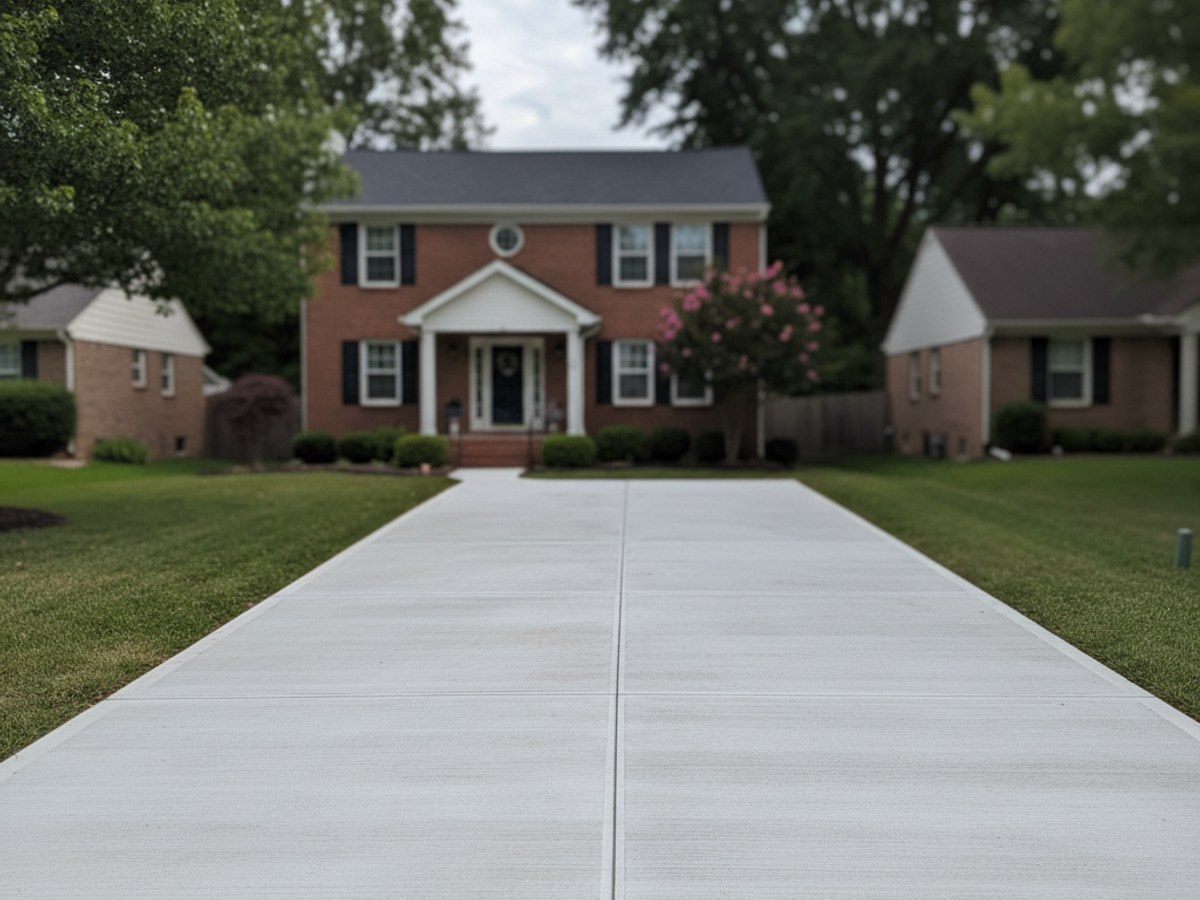
We form and pour driveways with a compacted gravel base and either rebar or fiber mesh, depending on the soil and the load. Control joints go in the same day, cut to guide where the slab cracks instead of leaving it to chance.

Concrete Patios

A patio slab needs the same base work as a driveway even though it never sees a car, because tree roots and clay soil don't care what's parked on top. We pour broom finish, exposed aggregate, or stamped, whatever suits how you'll use the space.

Stamped Concrete

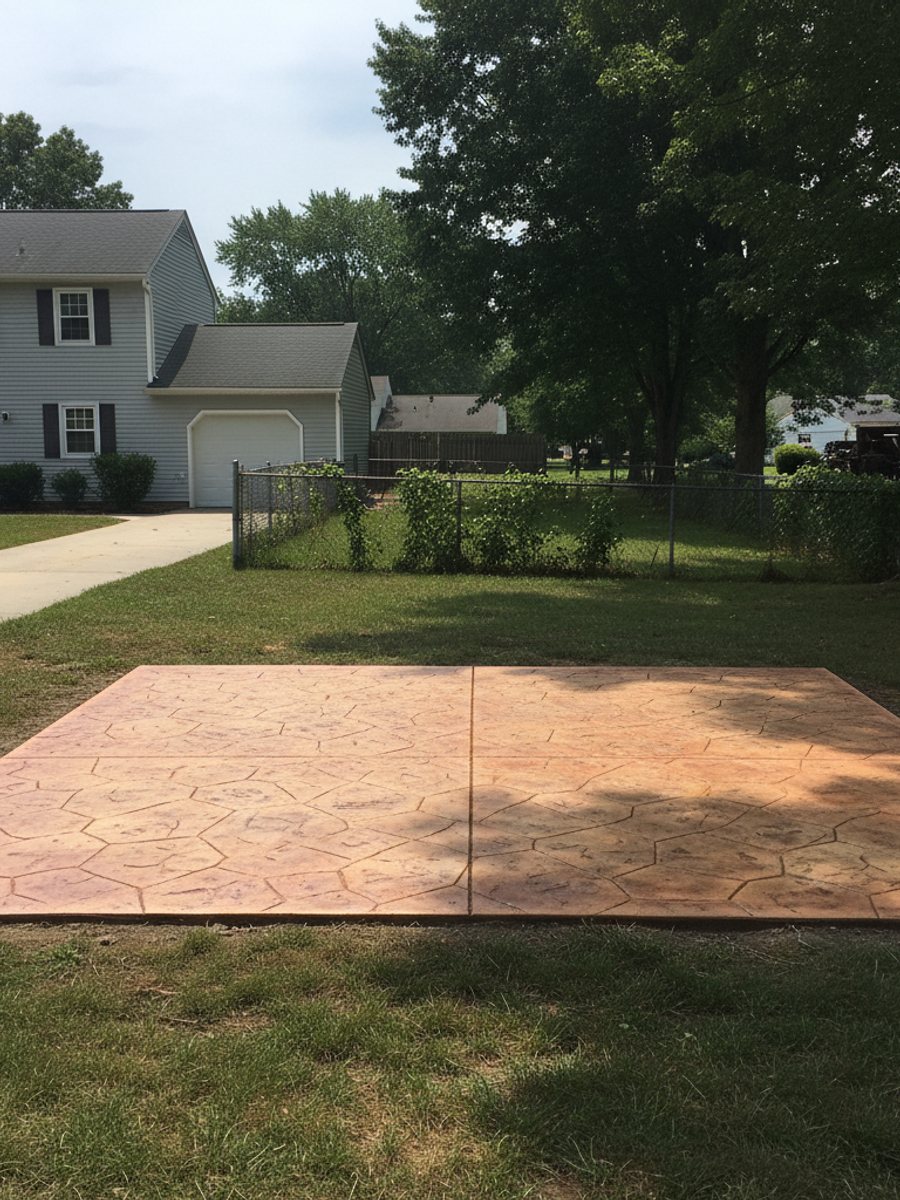
Stamped concrete gets a color hardener and a release agent pressed in with texture mats before it sets, patterned to look like flagstone, brick or slate. It costs less than the real material and doesn't have joints for weeds to come up through, but it requires resealing every couple of years to keep the color from fading.

Concrete Sidewalks & Walkways

Walkways get graded to shed water away from the foundation and poured to the width your local code calls for. We match the broom finish and joint spacing to whatever's already on the property when we're extending an existing path.

Concrete Repair

Cracked, sunken, or spalled concrete usually comes down to a washed-out base or water getting under the slab, not a bad pour to begin with. Depending on how bad it is we'll patch, mudjack to level it back out, or cut out and repour the section.

Concrete Steps & Stoops

Steps get poured with the right rise and run so they're safe to walk, not just whatever fits the space. We tie new steps into the existing slab or footing with rebar dowels so they don't separate and pull away over time.

Garage Floor Slabs

Garage floors get a vapor barrier under the slab and a broom or trowel finish depending on whether you want to park on it or park and work on it. We slope the floor slightly toward the door so water runs out instead of pooling.

Concrete Resurfacing

If the slab underneath is still structurally sound but the surface is pitted, scaled, or just ugly from years of salt, a bonded overlay can give you a new wearing surface without a full tear-out. It won't fix a slab that's cracked through or settling, that needs a repair instead.

Exposed Aggregate Concrete

The top layer of cement paste gets washed off before the concrete fully cures, exposing the stone underneath for a textured, non-slip surface. It holds up well on pool decks and walkways where a smooth finish gets slick when wet.

Concrete Removal & Demolition

Old driveways, patios and sidewalks get broken up and hauled off before we grade and pour the new slab. We can also handle a demo-only job if you're bringing in a paver or asphalt contractor after.

How It Works

Four steps, and no surprises in any of them.

01

We come and look

You tell us what you want doing, we look at what is actually there, and we ask the awkward questions early.

02

You get a price

In writing, itemised, free. If something might add cost later we flag it now rather than at the end.

03

We do the work

Same crew throughout. We cover your floors, keep the dust down and tidy up before we leave each day.

04

We walk it with you

You point out anything you are not happy with and we fix it before the invoice, not after.

Where We Work

All of this, across Greater Landover, MD

Available for concrete work throughout these Maryland communities.

Greater Landover, MD
Washington, MD
Baltimore, MD
Alexandria, MD
Silver Spring, MD
Bowie, MD
College Park, MD
Laurel, MD
Greenbelt, MD
Hyattsville, MD
Largo, MD
Capitol Heights, MD
Common Questions

Things worth asking

Questions that come up once a concrete project is underway.

Do I need a permit for a new driveway or patio?
Many Maryland counties require a permit for new driveway aprons or slabs over a certain size, especially where they connect to a public street. Prince George's County and neighboring counties have different thresholds, so permit requirements need checking against the specific address before work starts.
How long does a concrete driveway take to pour and cure?
A typical residential driveway pour takes one day once forms and base prep are complete, though prep work can add a few more days beforehand. The slab handles foot traffic after about 24 to 48 hours, but shouldn't carry vehicle weight for at least 7 days, and reaches full strength around 28 days.
Can concrete work be scaled to a budget?
Concrete jobs can be adjusted to a budget by changing slab size, finish type, or using wire mesh instead of rebar where the load allows it. A stamped or exposed aggregate finish costs more than a plain broom finish, so simplifying the finish is often the easiest place to save money.
What kind of guarantee comes with concrete work?
Workmanship on a new concrete pour is typically covered for a set period after completion, covering issues like improper curing or joint placement. Cracking from ground movement, tree roots, or settling outside the contractor's control usually isn't covered the same way, and that distinction should be spelled out in the written quote.
Who handles questions once the job is underway?
One point of contact should handle scheduling, questions and any changes once a concrete job starts, rather than switching between different people. That contact should stay reachable by phone throughout the project, not just before the quote is signed.
What kind of concrete mix gets used for driveways and patios?
Standard residential flatwork typically uses a 3,500 to 4,000 PSI air-entrained mix, which resists the freeze-thaw cycles common in Maryland winters. Garage floors or areas expecting heavier loads may call for a higher PSI mix or additional rebar reinforcement.
Can I stay in my house during a driveway or patio pour?
Living in the house during a concrete pour isn't a problem, since the work happens outside and doesn't affect utilities or interior access. The main disruption is losing use of the driveway itself for about a week while the new slab cures enough for vehicle traffic.
How should the site be prepared before the crew arrives?
Clearing vehicles, furniture, or plants from the work area ahead of time speeds up a concrete job, along with marking any sprinkler lines or buried cables. Everything else, from excavation to form-setting, gets handled by the crew on pour day.
What if something unexpected shows up once excavation starts?
Old buried debris, unexpected drainage issues, or soft, unstable soil sometimes turn up once excavation begins, and any of these can require extra base work beyond the original quote. Any change should get discussed and priced before proceeding, not added to the final bill as a surprise.
How should new concrete be cared for after it's poured?
New concrete should stay off-limits to vehicle traffic for about a week and avoid deicing salt for at least the first winter, since fresh concrete is more vulnerable to salt scaling. Sealing the surface every two to three years helps resist water penetration, staining, and freeze-thaw damage over the life of the slab.

Not sure what you need?

Describe the problem and we will tell you what it probably is. No obligation.
Call (301) 859-7889